


Implanter-based hair transplantation
DHI Hair Transplant in Turkey
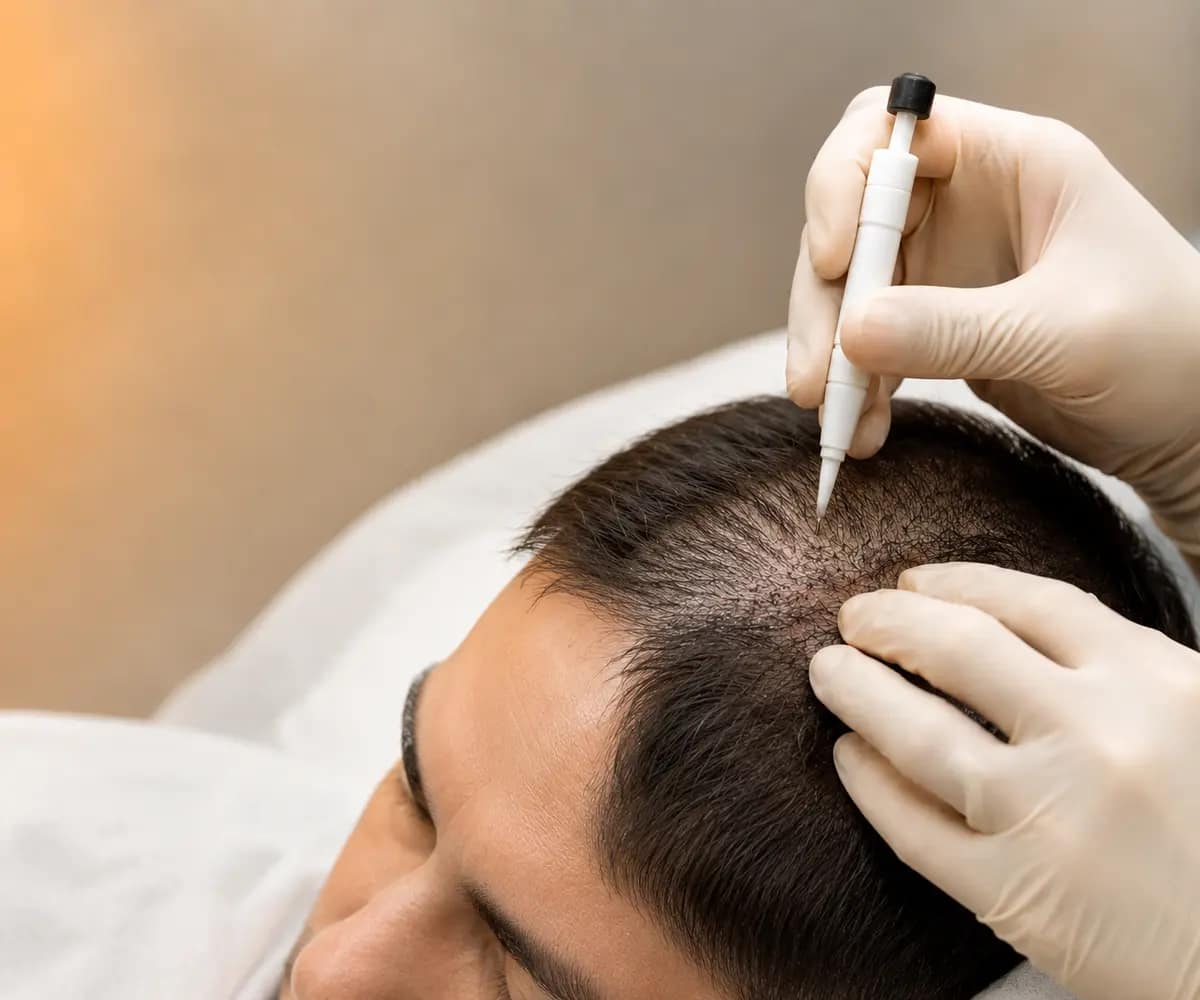
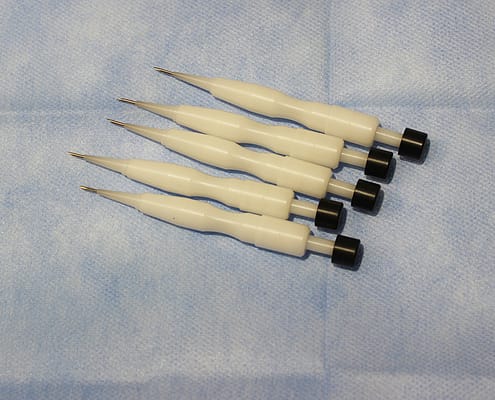
A DHI hair transplant in Turkey uses an implanter device, commonly known as a Choi-type implanter pen, to place prepared follicular unit grafts into the recipient area.
At byhairclinic Istanbul, treatment planning is based on donor capacity, existing hair, hair loss pattern, facial proportions and long-term aesthetic goals.
This implantation approach can provide detailed control over graft placement and may be considered for patients who require targeted density, hairline refinement or transplantation between existing hairs.
✓ Partial or selective shaving may be possible in suitable cases
Selective shaving options
Depending on the donor area and treatment plan, complete shaving may not always be necessary.
Controlled graft placement
Implanter devices allow careful control of graft depth, angle and direction during placement.
Individual treatment planning
The technique is selected according to donor capacity, existing hair and the needs of the recipient area.
The technique
How Does DHI Hair Transplantation Work?
Hair transplantation involves moving healthy follicular units from a donor area, usually at the back or sides of the scalp, to areas affected by thinning or hair loss.
Before treatment, the donor area, existing hair, hair characteristics and expectations are assessed to create an individualized plan.
A DHI hair transplant in Turkey generally combines follicular unit extraction with implantation using an implanter device.
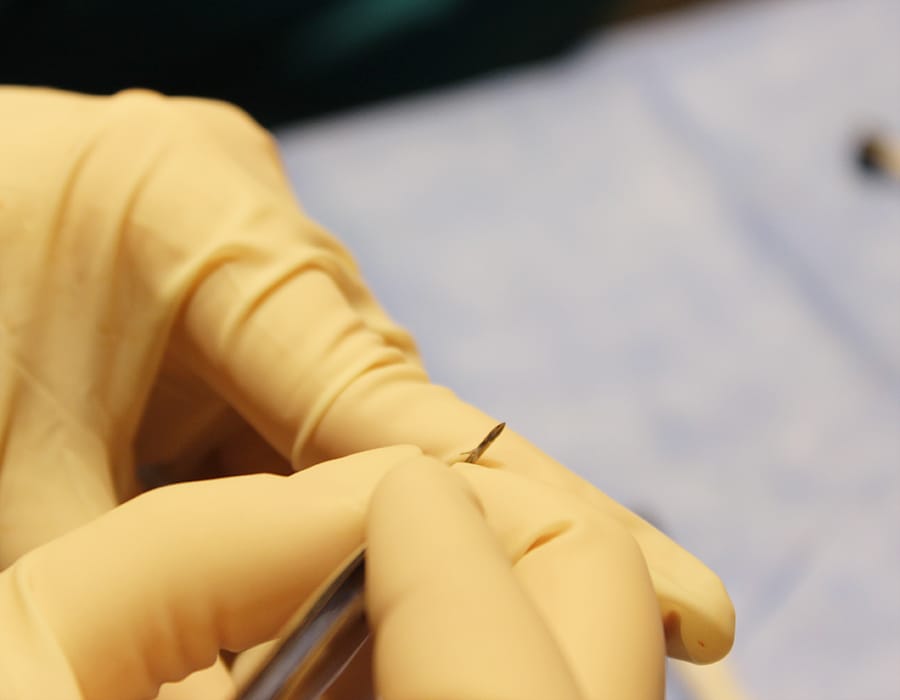
The graft is loaded into the implanter and then positioned in the recipient area according to the planned angle, direction and depth.
The International Society of Hair Restoration Surgery explains that the term “DHI” is commonly used to describe direct implantation with an implanter device rather than a completely separate hair transplant method.
Implanters may allow graft placement without directly handling the follicle bulb during insertion. :contentReference[oaicite:1]{index=1}
This approach may be useful when working between existing hairs, refining a frontal hairline or treating a localized area where controlled placement is important.
Suitability depends on the individual donor area and treatment objectives.
- Implanter-based graft placement
- Control of angle, direction and depth
- Useful for localized density and hairline refinement
- Treatment plan adapted to existing hair and donor capacity
Key characteristics
Benefits of DHI Hair Transplantation
Controlled implantation
The implanter device allows the operator to position grafts according to the planned angle, direction and depth in the recipient area.
Hairline refinement
Controlled placement can be useful when designing a frontal hairline or working in areas where the direction of surrounding hairs needs to be followed carefully.
Localized density planning
DHI implantation may be suitable for selected areas where density needs to be increased without treating the entire scalp.
The number of grafts is determined according to donor availability and recipient-area requirements.
Personalized technique selection
DHI is not automatically the right approach for every patient.
The choice between DHI, Sapphire FUE or another implantation strategy should be based on the characteristics of the individual case.
Step by step
DHI Hair Transplant in Turkey: Treatment Process
Consultation and planning
The process begins with an evaluation of the donor area, degree of hair loss, existing density and aesthetic expectations.
The medical team determines the approximate graft requirement and the most appropriate implantation strategy.
Follicular unit extraction
Individual follicular units are removed from the donor area using FUE extraction instruments.
The grafts are then prepared and preserved until implantation.
Implanter preparation
Prepared grafts are loaded into the implanter device.
Careful graft handling is important because follicular units can be vulnerable to mechanical trauma during transplantation.
Direct graft placement
The grafts are positioned in the recipient area according to the planned hairline, direction and density.
The objective is to create a distribution that is compatible with the patient’s existing hair pattern.
Recovery period
DHI Hair Transplant Recovery
First days
Temporary redness, sensitivity, swelling and crusting can occur after hair transplantation.
The recipient area needs to be protected carefully during the early healing period.
Washing and aftercare
Patients receive individual instructions for washing, sleeping position and postoperative care.
The grafts should not be rubbed or disturbed during the early recovery stage.
Temporary shedding
Transplanted hairs commonly shed during the first weeks.
This can be part of the normal post-transplant cycle before new growth begins.
Progressive growth
New hair growth develops gradually over the following months.
The timing and density of growth vary between individuals and should be assessed over the longer term.
Video testimonial
Discover the DHI Experience
Every patient has different donor characteristics, hair density and treatment goals.
A consultation is necessary to determine whether DHI implantation is appropriate for the individual case.
Key information
Your DHI Treatment
Every DHI hair transplant in Turkey is planned individually according to donor area quality, hair characteristics and the recipient area.
- Procedure duration: varies according to graft number and treatment plan
- Anaesthesia: commonly performed under local anaesthesia
- Early new growth: may become noticeable after several months
- Result development: density typically continues to mature over approximately 10 to 18 months
For independent information about hair transplantation, recovery and potential risks, see the
NHS hair transplant guide.
The NHS notes that transplanted hair often sheds initially and that new growth and final results develop gradually over subsequent months. :contentReference[oaicite:2]{index=2}
Results and treatment choice
DHI Hair Transplant in Istanbul and Turkey
Patients searching for a DHI hair transplant Istanbul treatment often compare DHI with other FUE-based approaches.
The most appropriate option depends on donor capacity, existing hair, recipient-area size and the treatment objective.
At byhairclinic, DHI implantation may be considered for selected cases where controlled graft placement, localized density or hairline refinement is important.
For other patients,
Sapphire FUE hair transplantation
may be more appropriate.
You can learn more about the overall treatment journey in our
hair transplant in Turkey guide
or review documented cases on our
hair transplant before-and-after results
page.